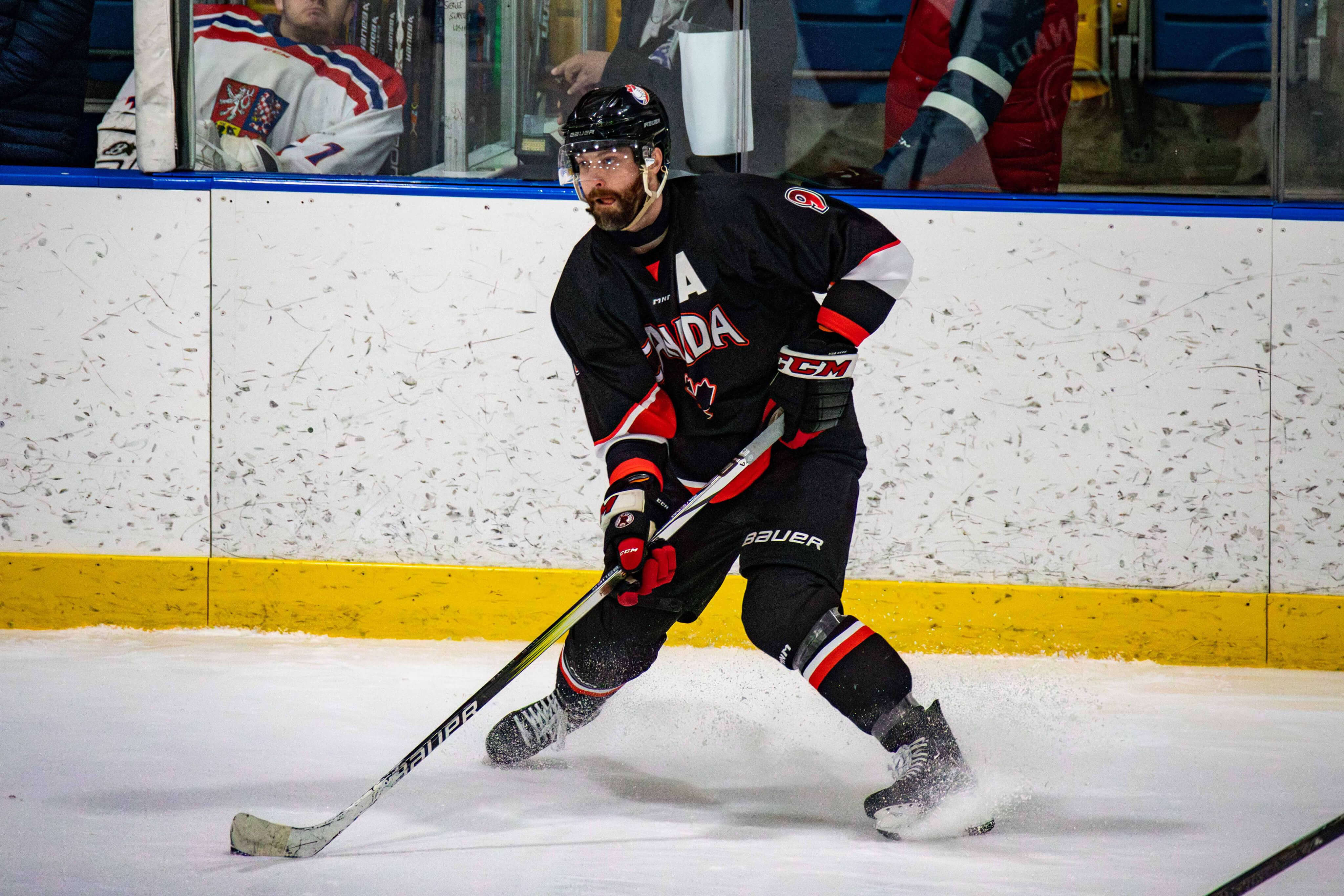
For Matthew Sheffield, elite sport and applied research aren’t separate worlds. They’re built on the same foundation: discipline, teamwork, and a drive to improve.
Matthew Sheffield has been a member of the Canadian Deaf Ice Hockey Team since 2010, first stepping into the program at the Roy Hysen Cup in Montreal. Over more than fifteen years, he has represented Canada across six countries and competed at the Deaf World Championships in Vancouver, becoming one of the most experienced players in program history.
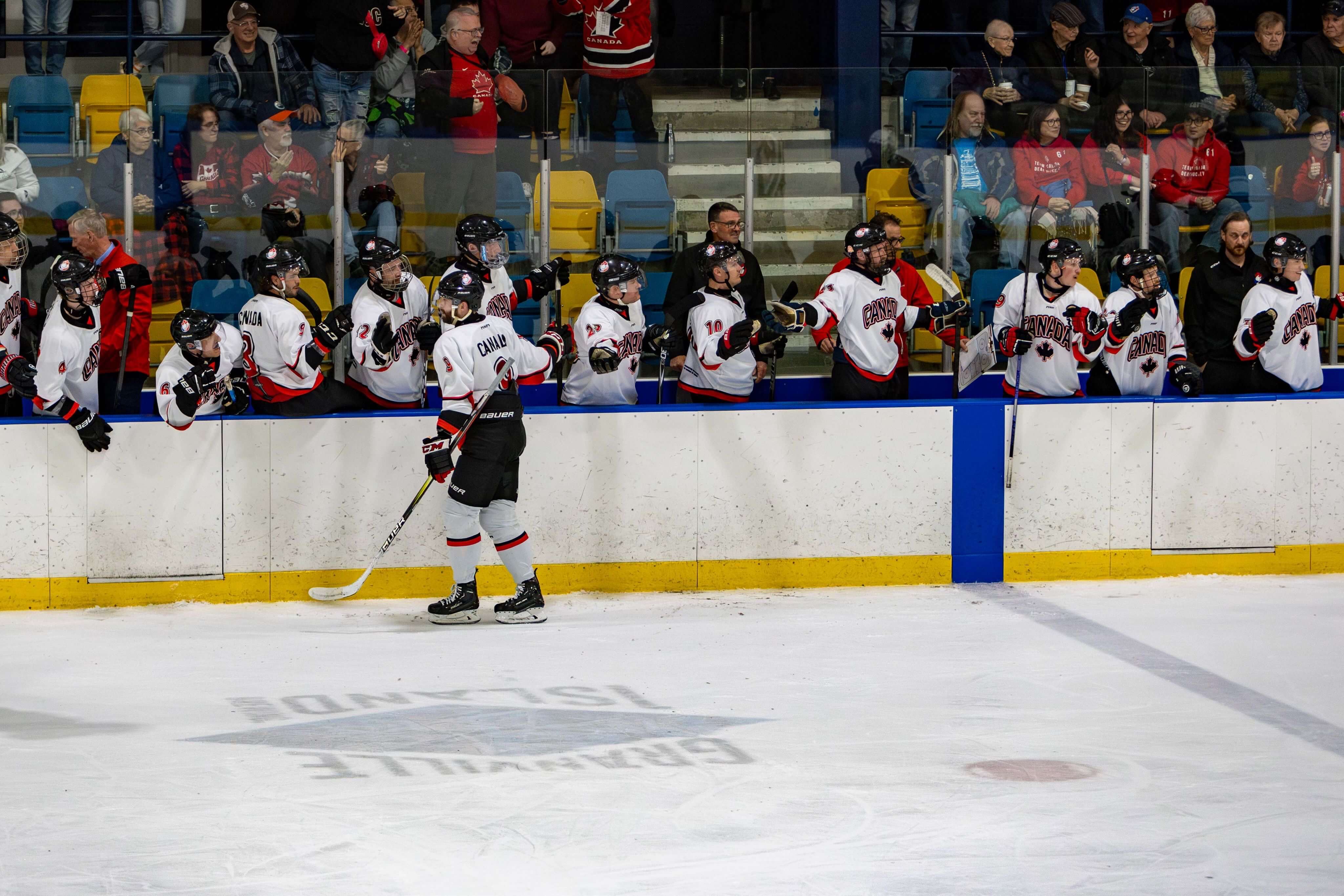
On the ice, Sheffield plays centre. He produces offensively and shuts down opposing top lines. One detail that captures his consistency on the biggest stage: he has scored in every medal game he has ever played.
More Than a Player
Sheffield’s impact on the game extends well beyond his own shifts. After relocating to Nova Scotia four years ago to return to college, he immediately started giving back. He spent three years behind the bench coaching the U16 AAA Valley Wildcats and has since stepped into a role with the U15 Major AAA program.
Hockey isn’t the only sport where he coaches. Sheffield has also taken on Jr. B and U17A lacrosse teams in the Valley, a natural extension of a deep history in the sport. He played five years of Junior A/B box lacrosse, three years of Junior Field, and three years of Senior Field. Lacrosse was once his strongest discipline. Today he’s back competing in Senior Box lacrosse in Nova Scotia, playing and coaching simultaneously.
“I’ve always loved giving back to the community. Coaching helps me grow my understanding of the game while passing that knowledge on to the next generation.”
A Different Kind of Map
The same curiosity and commitment that shaped Sheffield’s athletic career drove him into the classroom and, eventually, into a research lab.
Drawn to geography from a young age, he enrolled at the Centre of Geographic Sciences (COGS) in Nova Scotia, working through a GIS Technician Certificate, then a diploma in Cartography & Geovisualization, and finally a GIS Graduate Certificate. Each credential built on the last.
“What really hooked me was the ability to take data and visualize it in meaningful ways. You can look at a dataset and suddenly see what’s happening to a coastline, a community, a landscape. And that matters.”
At COGS, Sheffield found the same dynamic he’d experienced his entire sporting career: individual skill matters, but the team sharpens everyone. Classmates from different backgrounds brought different problem-solving approaches to GIS challenges, and that diversity made the work better.
“Networking is key in this field,” he says. “It’s a small industry, and those connections matter.”
Mapping Real Consequences
Those connections led Sheffield to the Applied Geomatics Research Group (AGRG), where he now works on flood analysis projects across Nova Scotia, with direct stakes for communities living along vulnerable coastlines.
His work involves georeferencing aerial imagery and comparing conditions before and after major storm events like Hurricane Fiona to track how water reshapes the land. The resulting datasets inform infrastructure planning, identify at-risk areas, and support decision-making at the community level.
Dr. Tim Webster, who connected with Sheffield during his capstone work and helped bring him into AGRG through GeoNova funding, saw the same quality in him that hockey coaches have recognized for years.
“I saw great potential and drive in Matthew. He took initiative and reached out about a project idea, which is always a strong sign.”
The Same Foundation
From elite sport to applied research, the through-line in Sheffield’s story is consistent: growth through challenge, contribution through collaboration. Whether he’s shutting down top lines, coaching young athletes through a tough stretch, or analyzing how a hurricane reshaped a Nova Scotia shoreline, the mindset driving him is the same.
“The hands-on experience, mentorship, and chance to contribute to meaningful projects are invaluable. The people around you want to see you succeed—so take advantage of that.”
And when he’s not on the ice, behind the bench, or in front of a GIS workstation? You’ll likely find him on a golf course, making the most of a Nova Scotia summer.